
Button Box

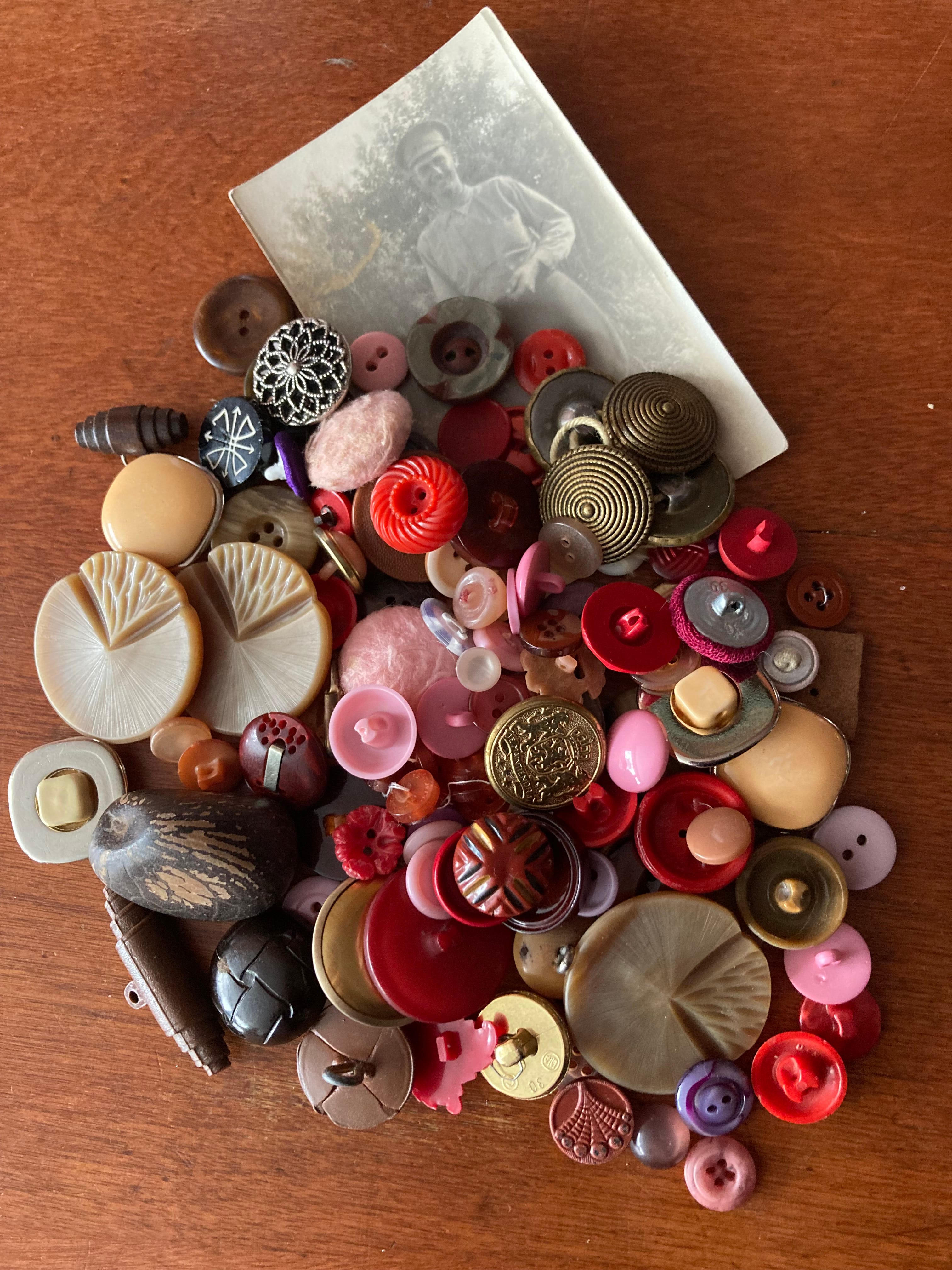
My mother stood in the dark closet at my Grandmother’s house, sobbing into the lapels of Grandpa’s wool overcoat. He smelled like pipe smoke and old wood. I was five. Just before, I had heard Grandma hang up the heavy black receiver in the dining room and say. “Doris, he’s gone.” Muffled weeping from both, a whispered “No, no.” No one said where Grandpa had gone. But Everyone Was Crying. It didn’t sound like he was coming back.
The old treadle sewing machine in the kitchen had two little drawers on each side of the cabinet. The machine itself was tucked away underneath till it was needed. There were begonias and African violets on top of it. It was squeezed in between the back door and the breakfast nook. I had permission to go into the button drawer with whenever I liked. I pulled it out and poured the buttons on to the oilcloth-covered table in the nook. I scooped them up and tumbled them through my fingers, a button waterfall.
There were five pink fuzzy buttons from Grandma Coffey’s housecoat, replaced when her daughters bought her a new green one for Christmas. And the tiny white pearl ones that I pretended were puppy teeth. The six leather-covered ones were from my Uncle Fred’s jacket, which he ruined at a party when he was “young and foolish” according to my grandma. Uncle Fred later became a bank manager and could afford as many leather-covered buttons as he wanted. I sorted my mountain of buttons into piles by size and colour. Then I placed my whole face into the empty box and inhaled the delicious scent of earth and musty wood.
My favourite button was an old brass military one. I took it to my mom. She was sitting on the side of the bed now, one hand clutching at the pink satin coverlet. She looked like crumpled paper. Her jagged sobs slowed and stopped. Then, a sharp inhale, and another wave of weeping swept her away. She put her soggy handkerchief to her face. She rocked herself gently back and forth, the same way she rocked me when I had an earache. I put the military button in her hand. She gazed at it and cried and cried.
My mother told me as I was growing up how great her father was. How brave. He sacrificed the use of his left arm for King and Country when he was injured at the Somme in WW1. His arm became permanently crooked at the elbow and was pretty much useless. Lex Clarence Coffey was an intelligent man. He was the only schoolteacher in the small town of Didsbury Alberta. Because of that, he was harder on my mom and her sister Marion than all the other students. His daughters had to be superior in all things, he said, because of the family’s “position in the community”. My mother carried that message with her for life.
Twenty-five years later, I am sitting with Aunt Marion at her green formica kitchen table. We’re having tea. I have just fled from a visit with my mother; she’s stopped speaking to me. Again. Marion listens till I’m done, takes a sip of her Orange Pekoe, and gently returns her cup to its saucer. She tells me Doris and their dad, contrary to the glowing picture my mother painted, had a fraught relationship. This is news to me. As she goes through the details, a wave of relief washes over me. Wait, is Marion telling me my mother doesn’t hate me? Could it be that her general disapproval of me and my choices (not all of which were great, I admit) was more about her all along?
As the eldest of three, Mom fought the major battles with her parents that her two younger siblings didn’t have to when they came along. At thirty-two, she announced to her parents she was going on a trip to Europe with her friend Alice. Her father told her she couldn’t go. And that’s when she declared her independence and went to Europe anyway. By this time, she was engaged to my father and had someone who loved her and a whole new life to return to. Marion told me, when their father and Dorie fought, she was like a cornered hissing cat. “Your mom is kind to everyone she knows, except her family, my aunt tells me. She saves all her frustration and anger for us.
I was liberated in Marion’s kitchen that day, untethered from the weight of my mother’s stories - and the ones I’d told myself.
My grandpa’s military button sits in my hand, heavy and tarnished. I wonder what jacket I should sew it onto? Maybe a funky sweater. Or maybe…I could just put it away with all the other buttons. It’s served its purpose now.
